Beyond Traditional Screens: A New Way to Engage Visitors
Digital screens are everywhere, but simply displaying information is no longer the only way technology can be used inside physical spaces.
Interactive technology takes digital experiences further by allowing people to participate through movement, touch, play and creativity.
A child can step onto a projected floor and influence the game beneath their feet. A museum visitor can explore digital information using a touchscreen table. A family can compete against each other using an augmented reality game, while another visitor can watch their own drawing become part of an animated digital environment.
Instead of asking people to simply watch, interactive installations encourage them to become part of the experience.
Interactive365 develops immersive interactive solutions for environments including education, retail, museums, entertainment and visitor attractions. Its current range includes interactive floors, augmented reality games, touch tables, digital drawing systems and active-play installations. (interactive365.co.uk)
What Is Interactive Technology?
Interactive technology refers to digital systems that respond to a person's actions.
Depending on the installation, interaction can happen through:
- Touch
- Body movement
- Jumping
- Walking
- Climbing
- Throwing
- Drawing
- Physical objects
- Motion sensors
- Augmented reality
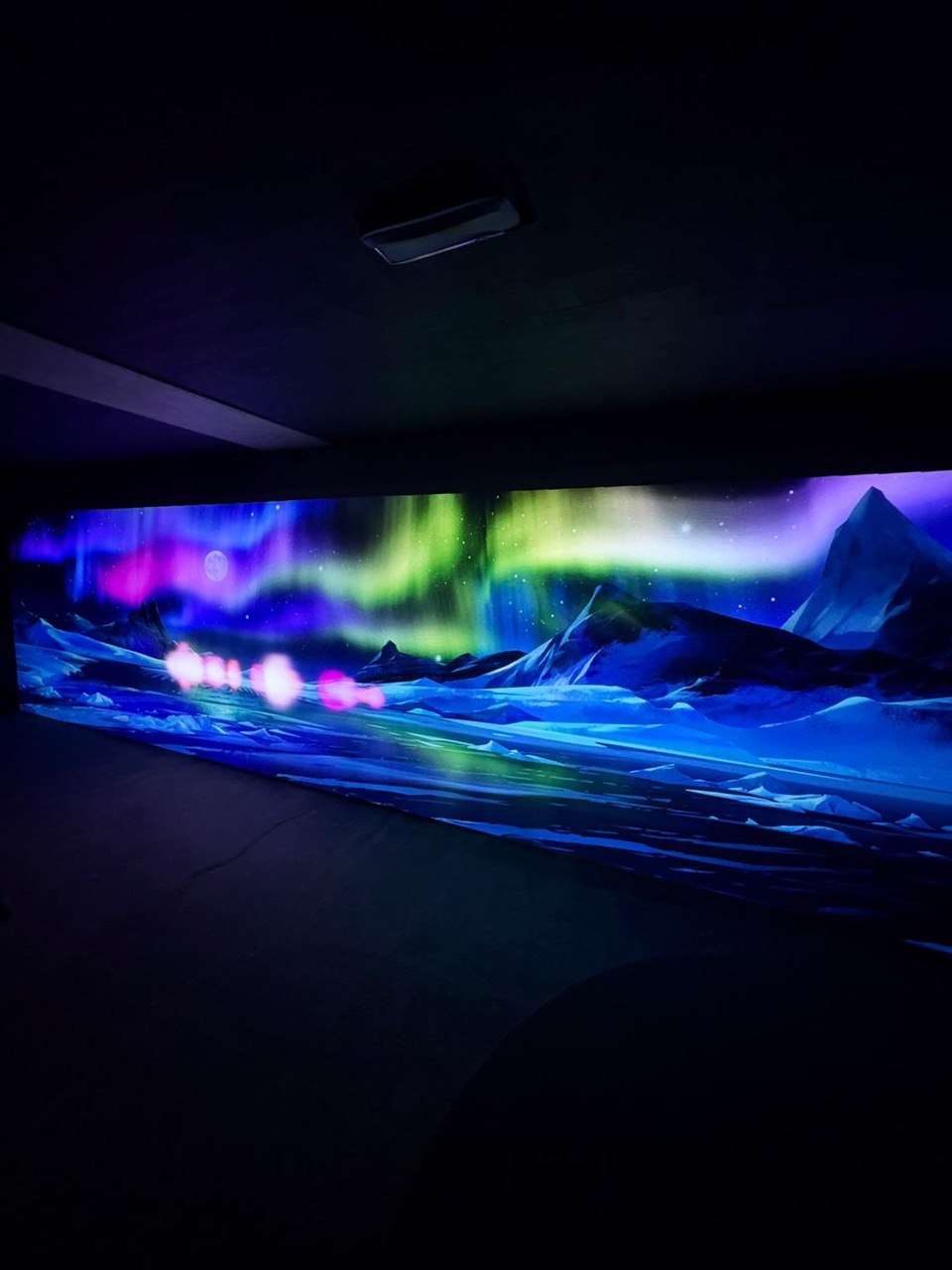
- Interactive projections
Traditional digital displays generally communicate information in one direction.
Interactive technology creates a two-way experience.
The visitor performs an action, the system detects it and the digital content responds.
For example, an Interactive Floor uses sensors and projection mapping to recognise movement and turn steps into responsive visuals and games. Interactive365's system supports group play and is designed for spaces such as schools, museums and entertainment environments. (interactive365.co.uk)
This ability to react instantly is what makes interactive technology feel immersive.
Why Are Venues Moving Towards Interactive Experiences?
Modern physical venues compete with smartphones, gaming consoles, streaming platforms and increasingly sophisticated home entertainment.
Providing another screen to look at does not necessarily create a memorable reason to visit a physical location.
Interactive environments offer something different: participation.
Visitors can move, compete, experiment, create and explore together.
This can be particularly valuable for:
- Family entertainment centres
- Indoor play centres
- Schools
- Nurseries
- Museums
- Science centres
- Visitor attractions
- Wildlife parks
- Hotels and resorts
- Shopping centres
- Exhibitions
- Events
Interactive365's existing projects demonstrate these kinds of applications across education and family attractions. For example, its Eaton Square School project combines an interactive sandbox, interactive floor, digital displays and a large interactive drawing wall in one multi-use learning environment. (interactive365.co.uk)
1. Interactive Floors Turn Empty Space Into Active Play
Floor space does not have to remain passive.
With an interactive floor projection system, an ordinary floor can become a responsive game area.
Sensors recognise where participants are moving while projected content reacts to their actions.
Children may:
- Pop virtual balloons
- Search for treasure
- Complete challenges
- Participate in team games
- Move through animated environments
Because several participants can become involved, interactive flooring can encourage both movement and social play.
Interactive365 currently provides a custom-size Interactive Floor with six interactive scenarios and a Lite version with 37 games and modes. (interactive365.co.uk)
An interactive floor can therefore work as a standalone attraction or as part of a wider immersive room.
2. Interactive Walls Make Physical Activity Digital
Walls can also become interactive surfaces.
An Interactive Ball Strike Wall combines projection-based entertainment with physical throwing activities.
Instead of interacting through a conventional controller, players use physical movement to engage with targets and game elements displayed on the wall.
For venues trying to encourage active participation, this style of experience can introduce technology without removing the physical element of play.
The iWall interactive fitness wall provides another approach by combining digital games with whole-body movement and fitness-oriented participation.
These installations can be particularly relevant for family entertainment venues, leisure centres and active-play environments.
3. Augmented Reality Can Transform Traditional Games
Interactive technology does not always require replacing an existing activity.
Sometimes digital technology can enhance something people already recognise.
A good example is Augmented Reality Air Hockey.
The familiar physical elements of air hockey remain, but augmented digital visuals are added to the gameplay.
Players still use real paddles and a puck, while projection technology creates an additional digital layer over the physical experience.
This combination of physical and virtual interaction can help established entertainment concepts feel new without making them unfamiliar.
Interactive365 lists AR Air Hockey among its ready-to-go interactive entertainment solutions. (interactive365.co.uk)
4. Digital Art Can Become an Immersive Experience
Interactive experiences do not have to focus entirely on competition.
Creativity can become interactive too.
With Digital Sketch Interactive Draw Alive, children can colour physical drawings before seeing their creations become part of an animated digital environment.
Rather than the activity ending when the drawing is finished, technology gives the artwork another life.
This can create a simple but memorable journey:
Draw → Scan → Watch → Interact
Interactive365 uses Digital Sketch as part of its wider range of digital learning and entertainment installations. (interactive365.co.uk)
For schools, museums and children's attractions, this kind of experience can combine traditional creative activity with digital storytelling.
5. Digital Painting Makes Walls Part of the Activity
Another creative option is the Interactive Digital Painting Wall.
Instead of using a conventional touchscreen or tablet, participants interact with a larger projected environment.
Large-format interactive activities can create a more communal experience because other visitors can watch or participate rather than having the activity confined to one small personal device.
For children's venues, digital painting can provide a calmer creative activity alongside more energetic installations such as floors, slides and climbing walls.
6. Augmented Reality Sandboxes Combine Physical and Digital Play
Not every immersive experience needs to remove physical materials.
An Interactive Sandbox with Augmented Reality combines real sand with digital projection.
As visitors reshape the sand, sensors recognise changes in its surface and the projected landscape can respond.
This creates a blend of:
- Tactile play
- Visual learning
- Digital interaction
- Creative experimentation
Interactive365 includes the AR Sandbox among its interactive products and ready-to-go solutions for education, museums, theme parks and other visitor environments. (interactive365.co.uk)
The technology is especially interesting because users are not simply interacting with pixels. They physically reshape something and see the digital environment respond.
7. Slides and Swings Can Become Digital Adventures
Traditional playground equipment can also become part of an immersive environment.
The Interactive Digital Slide adds digital content to the sliding experience, allowing physical play and projection technology to work together.
The Interactive Digital Swing follows a similar principle.
As the user swings physically, a virtual landscape responds to the movement. Interactive365 describes environments such as mountains, oceans and cityscapes that change alongside the swinging motion. (interactive365.co.uk)
This creates an important distinction between traditional digital entertainment and immersive interactive play.
The person is not controlling an avatar.
Their physical movement becomes the controller.
8. Interactive Climbing Adds Gameplay to Physical Challenges
Climbing naturally involves movement, coordination and problem-solving.
An Interactive Climbing Wall adds digital gameplay to the activity.
Projection and interactive technology can create challenges that encourage participants to react to what appears on the wall while continuing to climb.
This combination can help venues bridge the gap between conventional physical activity and digital entertainment.
Interactive365 positions its Interactive Climbing Wall as an experience designed to educate, engage and entertain children. (interactive365.co.uk)
9. Touch Tables Turn Screens Into Shared Experiences
Screens do not have to be passive either.
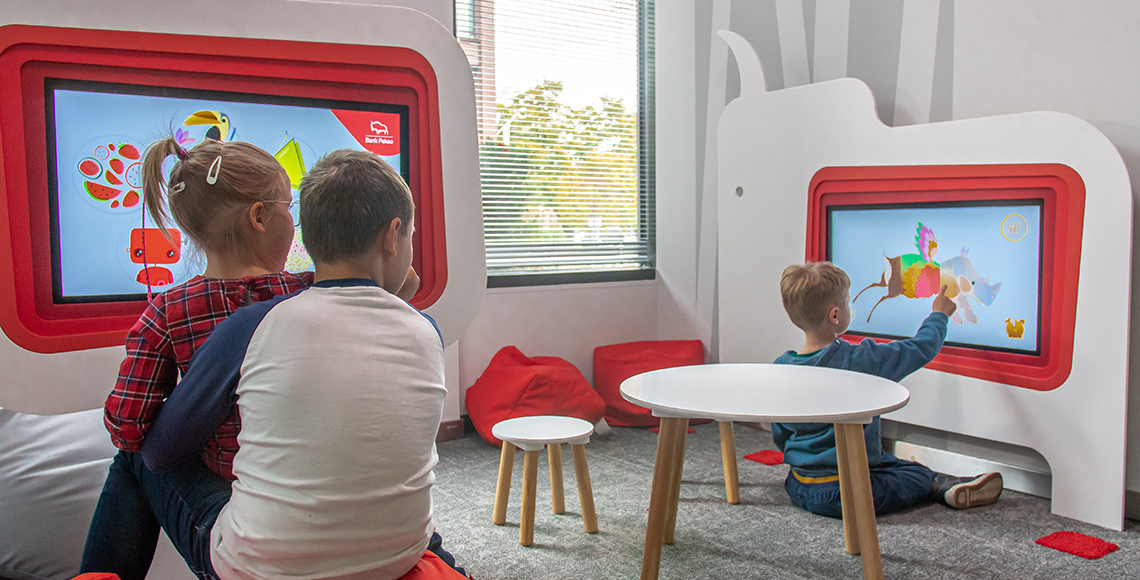
An Interactive Touch Table transforms the touchscreen into a shared horizontal experience.
Interactive365 currently offers 32-inch and 43-inch variants, with the 43-inch version featuring a 4K capacitive screen supporting 10-point multi-touch interaction. (interactive365.co.uk)
Multi-touch technology allows several users to participate around the table simultaneously.
Applications can include:
- Educational activities
- Puzzles
- Multiplayer games
- Videos
- Interactive information
- Collaborative tasks
This makes touch tables suitable for spaces such as schools, play centres, waiting areas, museums and family-oriented venues. (interactive365.co.uk)
10. Motion-Based Games Encourage Children to Move
One of the strengths of interactive technology is its ability to connect digital entertainment with physical activity.
Jumplings is a motion-based jumping game designed around movement and competition.
Rather than sitting with a controller, children become physically involved in the gameplay.
For indoor attractions, this type of digital activity can provide an alternative to passive screen entertainment while still delivering the game-like experience children recognise.
Interactive365 currently includes Jumplings within its core product range alongside iWall, its interactive fitness wall. (interactive365.co.uk)
From Individual Attractions to Complete Immersive Environments
The most interesting possibilities emerge when several interactive technologies are combined.
A venue could create an experience where visitors:
- Enter through a projection-mapped environment.
- Explore an augmented reality sandbox.
- Create a character using Digital Sketch.
- Participate in interactive floor games.
- Complete an interactive climbing challenge.
- Finish with an augmented reality air hockey competition.
Each attraction provides a different type of interaction.
One encourages creativity.
Another encourages physical activity.
Another encourages competition.
Another encourages exploration.
Interactive365's DigiKids case study demonstrates this multi-experience approach, using several digital activities within a compact entertainment venue rather than relying on one large attraction. (interactive365.co.uk)
Custom Interactive Content Can Make the Experience Unique
Ready-to-use interactive products can work well when venues need an established solution.
However, some organisations need technology that fits a specific story, brand or environment.
Interactive365 provides interactive content creation covering discovery, design, development, installation and post-launch support. (interactive365.co.uk)
Custom interactive content could include:
- Original characters
- Branded games
- Educational themes
- Exhibition-specific stories
- Custom 3D environments
- Seasonal activities
- Venue-specific challenges
- Augmented reality experiences
This allows a digital installation to feel connected to the venue rather than simply placed inside it.
Projection Mapping Can Transform the Space Itself
Interactive products are only one way to create an immersive environment.
Projection mapping services can transform walls, rooms, objects, exhibition spaces, stages and even exterior surfaces using precisely mapped digital visuals. Interactive365 offers projection mapping for indoor and outdoor applications across the UK. (interactive365.co.uk)
Instead of installing a conventional rectangular display, projected content can follow the shape and architecture of the physical environment.
This is particularly valuable when atmosphere and storytelling are as important as gameplay.
Interactive Technology for Schools
Interactive installations can turn learning environments into places where children participate rather than simply observe.
Potential uses include:
- Movement-based learning
- Collaborative touchscreen activities
- Creative digital drawing
- Geography using AR landscapes
- Problem-solving games
- Sensory experiences
- Physical education activities
Schools can combine active and quieter installations depending on the learning objective.
For example, an Interactive Floor might support movement and group challenges, while a Touch Table provides a more focused collaborative activity.
Interactive365's LaunchPad project at Eaton Square School demonstrates how several interactive technologies can coexist within one educational space. (interactive365.co.uk)
Interactive Technology for Museums and Visitor Attractions
Museums traditionally depend heavily on objects, text panels and static displays.
Interactive technology can add another layer by allowing visitors to explore information through action.
A museum could use:
- Interactive touch tables
- Projection mapping
- Motion-responsive floors
- Custom digital exhibits
- Augmented reality
- Interactive walls
- Digital drawing experiences
These technologies can complement rather than replace physical exhibits.
Interactive365's interactive hand scanner project, for example, uses a simple participatory concept within a wildlife attraction to create a personalised visitor moment without requiring a large footprint. (interactive365.co.uk)
Interactive Technology for Family Entertainment Centres
Family entertainment centres can use interactive technology to broaden the range of experiences available under one roof.
An environment might combine:
- Interactive Floor
- Interactive Ball Strike Wall
- Interactive Climbing Wall
- Interactive Digital Slide
- Interactive Digital Swing
- Augmented Reality Air Hockey
- Jumplings
- iWall
The result can be a venue where visitors alternate between climbing, jumping, drawing, competing and exploring rather than repeating the same activity throughout their visit.
Interactive365's Imaginarium case study similarly demonstrates how interactive technology can combine active participation, tactile exploration, sensory engagement and themed storytelling within one attraction. (interactive365.co.uk)
Don't Forget Installation and Maintenance
Creating an immersive environment involves more than selecting equipment.
Projectors, sensors, touchscreens, computers, software and supporting AV equipment must be installed and calibrated correctly.
Interactive365's interactive equipment installation and maintenance service includes site assessment, projector setup, sensor integration, touchscreen installation, computer setup, software licensing, calibration and projection mapping. Ongoing services include software updates, hardware repairs and support for projectors, sensors, computers and displays. (interactive365.co.uk)
Planning technical support from the beginning can help protect the long-term reliability of the installation.
Frequently Asked Questions
What is interactive technology?
Interactive technology is digital technology that responds to user actions such as movement, touch, gestures, jumping, drawing or physical interaction. Examples include interactive floors, touch tables, augmented reality games and motion-responsive projections.
What is an immersive interactive experience?
An immersive interactive experience combines digital content with participation so that a visitor's actions influence what happens within the environment.
Where can interactive technology be used?
Interactive technology can be used in schools, museums, family entertainment centres, indoor play centres, retail spaces, events, exhibitions, sports venues and visitor attractions. Interactive365 currently provides solutions for these types of environments. (interactive365.co.uk)
Can interactive technology encourage physical activity?
Yes. Products such as interactive floors, climbing walls, ball-strike walls, interactive swings, Jumplings and iWall require users to physically move as part of the experience. (interactive365.co.uk)
Can an interactive installation be customised?
Yes. Interactive365 provides custom content creation covering concept development, 3D content, augmented reality, projection mapping, software/hardware integration, installation and ongoing support. (interactive365.co.uk)
Can several interactive products be installed in the same venue?
Yes. Several technologies can form part of one larger immersive environment. Existing Interactive365 projects such as DigiKids and Eaton Square School combine multiple interactive experiences within the same space. (interactive365.co.uk)
Do interactive installations need professional installation?
More complex systems may require projectors, sensors, computers, touchscreens, mounting equipment, calibration and projection mapping. Professional installation helps ensure these components work together correctly. (interactive365.co.uk)
Turn an Ordinary Space Into an Interactive Experience
The future of physical spaces does not have to mean adding more screens.
It can mean making the space itself interactive.
Floors can become games. Walls can respond to movement. Drawings can become animated characters. Sand can transform into augmented reality landscapes. Slides, swings and climbing walls can become part of digital worlds.
The result is technology that people do not simply watch — they experience it.
Whether you are developing a school, museum, indoor play centre, visitor attraction or family entertainment venue, the right combination of interactive technology can help create a space built around participation, creativity and movement.
Explore Interactive365's complete range of interactive products, discover its interactive digital services, or contact Interactive365 to discuss an interactive project.