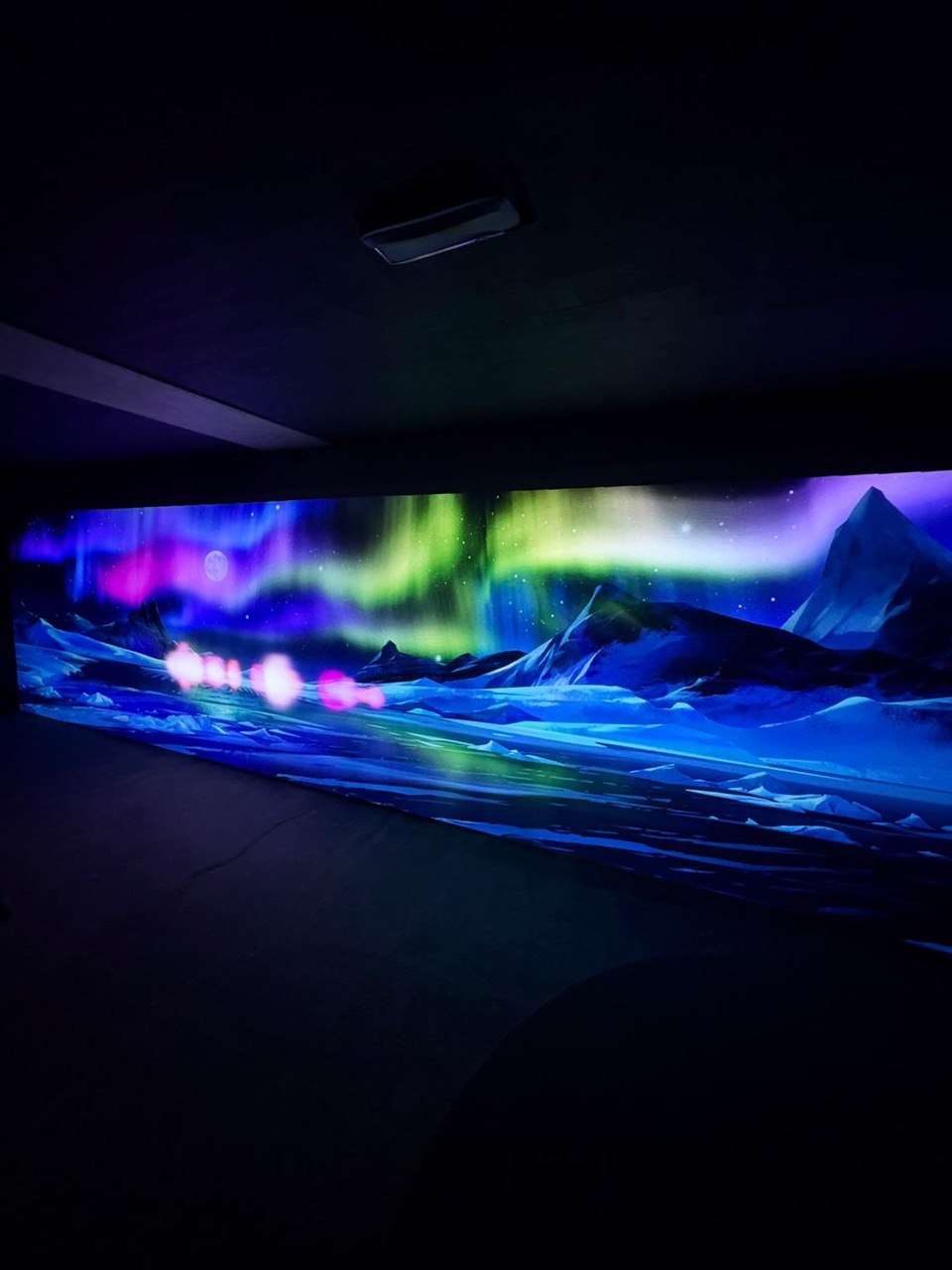
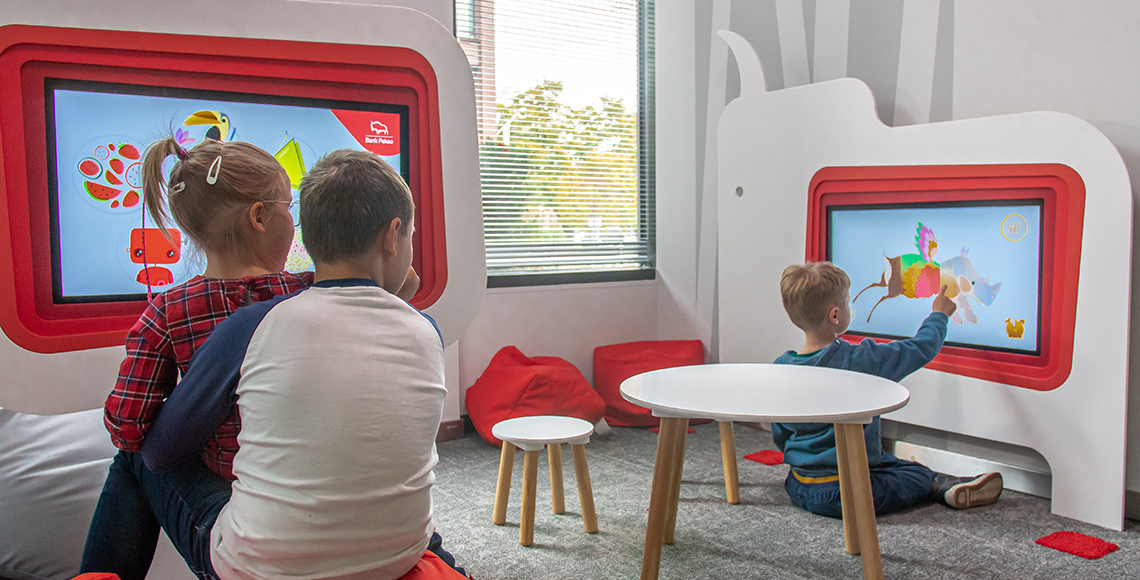
An interactive floor transforms an ordinary surface into a responsive digital experience that reacts when people walk, jump or move across it. Instead of watching content passively on a traditional screen, users become part of the experience as projected images, animations and games respond to their movements in real time.
This type of immersive technology is increasingly used in schools, museums, indoor play centres, family entertainment venues, retail environments and visitor attractions. It can encourage physical activity, support collaborative learning and create memorable experiences without requiring users to wear headsets or hold controllers.
Interactive365’s interactive floor system combines projection technology, movement detection and interactive content to turn open floor space into an engaging digital play area.
What Is an Interactive Floor?
An interactive floor is a digitally projected surface that detects movement and responds with visual or audio effects.
When someone steps onto the projected area, sensors recognise their position and movement. The system then sends this information to specialised software, which changes the content displayed on the floor.
Depending on the selected game or activity, users may be able to:
- Pop virtual balloons by stepping on them
- Move through digital water
- Complete treasure hunts
- Play projected sports games
- Solve educational challenges
- Interact with animated animals
- Compete in movement-based team activities
Unlike a conventional floor graphic, an interactive projection floor continually changes according to what users do. This makes the experience active, responsive and suitable for repeated use.
How Does an Interactive Floor Work?
An interactive floor typically uses four main components: a projector, movement sensors, a computer and interactive software.
1. A projector displays the content
A high-quality projector displays digital games, animations or educational activities onto the floor.
The projector is normally installed above the activity area so the projection remains clear while people move around beneath it. The projected area can be adapted to suit the venue, available floor space and intended audience.
The same principle is used in many modern projection mapping services, where digital content is carefully aligned with a physical surface.
2. Sensors detect movement
Motion or depth sensors monitor the interactive zone.
These sensors recognise when users enter the area and track actions such as:
- Walking
- Jumping
- Running
- Reaching
- Stepping on digital objects
- Moving between different positions
The sensor data allows the interactive floor projection to react immediately.
3. Software processes the movement
A computer runs the interactive software and processes information received from the sensors.
When a user steps on a projected object, for example, the software recognises the interaction and triggers the correct response. A balloon may burst, water may ripple or a game score may increase.
The response happens quickly enough to make the floor feel naturally connected to the user’s movement.
4. The projected content changes in real time
The projector displays the updated visuals, creating a continuous interaction between the user and the digital environment.
This real-time feedback is what separates an interactive floor from a standard video projection. Users do not simply watch the content. Their actions directly influence what happens next.
What Technology Is Used in an Interactive Floor System?
Although individual systems differ, most interactive flooring solutions use a combination of:
- Short-throw or standard projectors
- Motion or depth-detection sensors
- A computer or media server
- Interactive software
- Audio equipment
- Ceiling-mounted hardware
- Calibrated projection mapping
- Custom or pre-designed digital content
The equipment must be positioned and calibrated correctly so the sensors can accurately track movement throughout the projected area.
Professional interactive equipment installation and maintenance can help ensure the projector, sensors, software and supporting equipment work together reliably.
What Are the Benefits of Interactive Floors?
Interactive floors can provide educational, physical and commercial benefits, depending on how they are used.
Encourages physical activity
Interactive floor games encourage users to stand, walk, jump and move rather than remain seated.
The technology can make physical activity feel like a game, helping children engage with movement in an enjoyable and accessible way.
Supports group participation
A sufficiently large interactive floor can accommodate multiple users at the same time.
Children can cooperate on challenges, compete in games or explore the projected environment together. This creates opportunities for communication, teamwork and social play.
Makes learning more engaging
Interactive floor technology can turn educational topics into movement-based activities.
Schools and museums can use projected content to teach subjects such as:
- Numbers and mathematics
- Spelling and language
- Geography
- Science
- Animals and habitats
- Colours and shapes
- Problem-solving
Combining physical movement with visual information can make lessons feel more active and memorable.
Creates an immersive visitor experience
An interactive projection floor can help extend a digital experience beyond walls and conventional screens.
Visitors may walk through virtual oceans, follow animated pathways or explore themed environments that react beneath their feet. This can make an attraction feel more immersive without requiring wearable technology.
Uses space efficiently
Interactive flooring can add a substantial digital experience without permanently filling the room with large physical equipment.
When the projection is switched off, the area may still be used for other activities, depending on the layout and installation.
Offers flexible content
The same physical system can support different games, themes and visual experiences.
Venues may be able to change the content for different age groups, seasons, lessons, events or promotional campaigns. Bespoke interactive content creation can also align the experience with a venue’s theme, learning objectives or brand identity.
Where Can Interactive Floors Be Used?
Interactive floors are suitable for a wide variety of public, educational and commercial environments.
Schools and nurseries
Schools can use interactive flooring for active lessons, group games and movement-based learning.
It can be particularly valuable in multi-purpose rooms, libraries, activity areas and sensory learning spaces.
Museums and visitor attractions
Museums can use interactive floor projection to make exhibitions more participatory.
Visitors might follow historical pathways, explore natural environments or interact with projected objects connected to the exhibition theme.
Indoor play centres
Interactive floor games can give children another form of active entertainment alongside slides, climbing equipment and soft play.
Changing the digital content can also help venues provide variety for returning visitors.
Family entertainment centres
Family entertainment venues can combine an interactive floor with other digital play equipment to create a larger immersive zone.
Different attractions can support physical play, creativity, competition and collaborative activities within the same venue.
Retail spaces
Retailers can use interactive flooring for campaigns, product launches, seasonal installations and branded experiences.
A responsive floor can attract attention and encourage visitors to spend more time engaging with a display.
Events and exhibitions
Temporary or permanent interactive projection systems can help exhibition stands and event spaces attract participation.
The content can incorporate branded graphics, games or visual effects connected to the event.
Healthcare and waiting areas
Appropriate interactive games can help make waiting environments feel more welcoming for children.
Interactive technology can provide an activity without relying solely on handheld devices or fixed television screens.
Can Interactive Floor Content Be Customised?
Interactive floor content can be designed around a particular theme, audience, campaign or learning objective.
Customisation may include:
- Brand colours and logos
- Venue-specific characters
- Educational subjects
- Seasonal themes
- Branded games
- Exhibition content
- Different difficulty levels
- Multilingual instructions
- Custom sound effects
For example, a wildlife attraction could use animals and natural habitats, while a school could request activities connected to its curriculum.
Interactive365 also provides creative concepts for interactive experiences, helping venues develop an installation that fits their space and audience.
What Should a Venue Consider Before Installation?
Before installing an interactive floor system, a venue should assess the physical environment and intended use.
Available floor space
The projected zone should have enough open space for users to move safely.
Venues should also consider how many people are expected to use the system simultaneously.
Ceiling height and structure
The projector, sensors and supporting equipment are normally mounted above the activity area.
The Interactive365 system requires a clear projection area and sufficient ceiling height. The mounting structure must also be suitable for the equipment being installed.
Lighting conditions
Strong direct light can reduce the visibility of projected images.
Controlling natural and artificial lighting can help create a brighter and more clearly defined interactive floor display.
Floor surface
A plain, light and non-reflective surface will usually provide better projection quality than a dark, patterned or highly polished floor.
The surface should also be safe for active movement.
Power and connectivity
The projector, sensors and computer require a stable power supply.
Some systems may also need an internet connection for remote support, content updates or system monitoring.
Target audience
The games and activities should match the users’ ages, abilities and interests.
A nursery may need simple visual interactions, while an older audience may prefer competitive games, fitness challenges or detailed educational content.
Interactive Floor Options from Interactive365
Interactive365 offers two main floor configurations.
The custom-sized Interactive Floor can be adapted to the available space and includes a selection of interactive scenarios. This option may suit venues that require a larger or more tailored installation.
The Interactive Floor Lite has a set projection size and provides a wider collection of modes and games. It may suit venues looking for a more standardised interactive play solution.
The right option will depend on the available space, desired content, audience, installation environment and project budget.
Other Interactive Products for Immersive Venues
An interactive floor can operate as a stand-alone feature or as part of a larger digital play environment.
Venues focused on creative activities can complement it with Digital Sketch Interactive Draw Alive, where children’s drawings become animated digital characters, or an Interactive Digital Painting Wall.
For sensory and educational play, an Interactive Sandbox with Augmented Reality combines real sand with changing digital terrain.
Movement-based venues can consider an Interactive Climbing Wall, Interactive Digital Slide, Interactive Digital Swing, Interactive Ball Strike Wall, Jumplings motion-based game or the iWall interactive fitness wall.
Other options include Augmented Reality Air Hockey for competitive entertainment and an Interactive Touch Table for collaborative touchscreen games and educational applications.
Venues can also review the complete collection of immersive interactive products to compare available solutions.
FAQ
What is an interactive floor?
An interactive floor is a projected digital surface that uses sensors to detect movement. The projected images or games respond when users walk, jump or move across the activity area.
How does an interactive floor detect movement?
Motion or depth sensors track the position and actions of users. Interactive software processes this information and changes the projected content in real time.
Do users need to wear special equipment?
No. Users normally interact with the floor through natural body movements, so headsets, handheld controllers and wearable sensors are not required.
Can several children use an interactive floor together?
Yes. Interactive floors can support group play, although the recommended number of users will depend on the projected area, selected game and available space.
Can an existing room be converted into an interactive space?
In many cases, yes. The room must have adequate ceiling height, a suitable mounting structure, controlled lighting, a stable power supply and enough clear floor space.
Are interactive floors suitable for education?
Yes. Interactive floors can support movement-based learning, group participation and visual activities covering subjects such as mathematics, language, geography and science.
Can the games be changed?
Yes. Interactive floor systems can provide multiple games and scenarios. Custom content may also be developed for particular brands, exhibitions, lessons or venue themes.
How much does an interactive floor cost?
The cost depends on factors such as the projection size, equipment, content, room conditions, installation requirements and level of customisation.
Create an Engaging Interactive Space
An interactive floor can transform unused floor space into a responsive experience that encourages movement, learning and participation.
By combining movement sensors, projection mapping and interactive software, the system allows users to control digital content naturally through their actions. It can operate as a single attraction or form part of a larger immersive environment with interactive walls, creative activities and movement-based games.
To discuss the most suitable system for your school, museum, play centre or visitor attraction, contact Interactive365 for guidance on content, equipment and installation.