Getting families through the door is only one part of running a successful visitor attraction.
Once they arrive, the next challenge is keeping children interested, giving families enough variety to explore and creating experiences visitors will want to enjoy again.
That is where interactive play can make a significant difference.
Instead of relying entirely on static displays or traditional play equipment, interactive technology allows children to move, compete, create, explore and influence what happens around them.
A projected floor can respond to their footsteps. A drawing can become an animated character. A climbing wall can transform into a digital game. Real sand can become mountains, rivers and virtual landscapes.
For family entertainment centres, indoor play venues, museums, leisure destinations and visitor attractions, these experiences can help create an environment where children have more reasons to continue exploring.
Interactive365 provides a broad range of interactive entertainment and digital play solutions designed for education, leisure and family-focused environments.
Why Visitor Engagement Matters for Family Attractions
Family attractions are competing for something increasingly valuable: attention.
Children are surrounded by digital entertainment at home, including smartphones, games, streaming services and interactive apps. A physical venue therefore needs to offer something that cannot easily be recreated on a sofa.
The advantage of interactive play is that it combines digital technology with physical participation.
Children are not simply watching something happen.
They are making it happen.
This might involve:
- Jumping
- Running
- Throwing
- Climbing
- Drawing
- Touching
- Competing
- Collaborating
- Building
- Exploring
The more ways children can participate, the more varied the overall visitor experience can become.
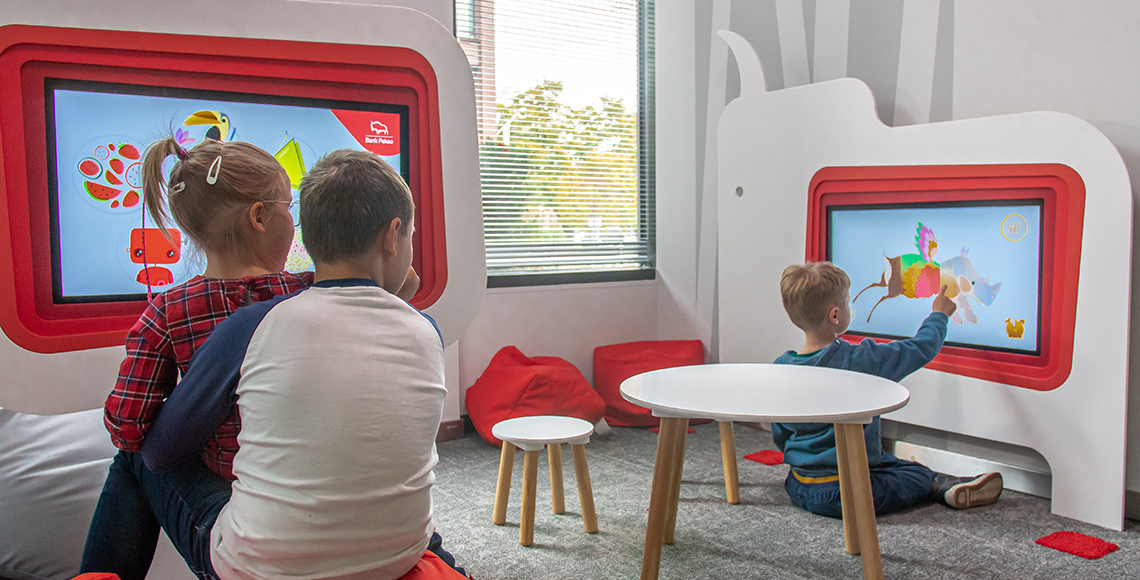
Interactive365's DigiKids project, for example, combines creative, sensory and game-based activities within a relatively compact entertainment space, allowing children to draw, paint, explore augmented reality sand and use digital games.
Interactive Play Gives Visitors Something to Do, Not Just Something to See
Many traditional attractions are designed around observation.
Visitors look at an exhibit, watch a screen, read information and then continue to the next area.
Interactive attractions change that relationship.
Instead of asking:
“What can visitors look at?”
Venues can begin asking:
“What can visitors do here?”
That change can completely alter how a space feels.
With an Interactive Floor, for example, children can physically move across projected games and environments.
Interactive365's current system offers group-based active play through a custom-size installation with six interactive scenarios or a Lite configuration containing 37 modes and games.
The floor therefore becomes more than a surface connecting one attraction to another.
It becomes part of the entertainment itself.
Variety Is One of the Keys to Longer Engagement
Children do not all enjoy the same activities.
One child may want to run and compete.
Another may prefer drawing.
Another might spend much longer exploring sand or solving a puzzle.
A venue relying on one type of interaction risks losing the attention of children who are less interested in that activity.
A stronger interactive environment can offer several forms of play.
Active play
Active experiences encourage children to use their whole bodies.
Options can include:
- Interactive Floor games
- Interactive Climbing Wall
- Interactive Ball Strike Wall
- Jumplings motion-based game
- iWall interactive fitness wall
These products introduce running, climbing, throwing, jumping or whole-body movement into the digital experience.
Creative play
Some children are naturally drawn towards imaginative and artistic activities.
Venues can provide creative experiences through:
Digital Sketch allows children to colour a physical template before scanning it and watching their creation appear inside an interactive projected world.
This gives the visitor a stronger sense of ownership because their own creation becomes part of the experience.
Sensory and exploratory play
Not every activity needs to be fast-paced.
An Interactive Sandbox with Augmented Reality combines real sand with responsive projection.
As children reshape the sand, sensors detect changes in depth and the digital environment responds. Interactive365 currently offers 29 interactive scenarios, covering themes ranging from dinosaurs to sea creatures.
This can create a slower, more exploratory experience alongside higher-energy attractions.
Social and collaborative play
An Interactive Touch Table provides another type of interaction.
Instead of moving around a large activity area, children can gather around one touchscreen and participate together.
Interactive365 currently offers 32-inch and 43-inch versions, while the larger model supports 10-point multi-touch interaction.
By combining active, creative, sensory and collaborative activities, venues can create more variety without making every attraction feel identical.
Repeat Play Can Make an Experience More Valuable
A strong family attraction should not necessarily be experienced only once.
Children often enjoy repeating activities when something changes each time.
Games naturally support this behaviour through:
- Different scores
- Different opponents
- Multiple levels
- New scenarios
- Changing visual effects
- Alternative challenges
- Competitive outcomes
- Different creative results
Consider a traditional slide.
Once a child understands the experience, each descent may be fairly similar.
An Interactive Digital Slide can introduce responsive projections and digital effects to the activity, giving the physical play feature another layer of entertainment.
Interactive365's BillyBird Drakenrijk installation combines an interactive slide with a Ball Strike Wall specifically to provide active, repeatable experiences within a themed indoor play environment.
The objective is not simply to add technology.
It is to give visitors another reason to play again.
Competition Can Create Natural Replay Value
Competition is one of the simplest ways to encourage repeat engagement.
If a child wants to beat their score, challenge a sibling or compete with a friend, one session can quickly become several.
The Interactive Ball Strike Wall is particularly suited to this style of participation.
Children throw balls at moving and static projected targets while participating in different scenarios. Interactive365 states that its BallStrike system has no fixed limitation on interaction points, allowing multiple children to take part together.
Competitive entertainment can also come from Augmented Reality Air Hockey.
Instead of removing the familiar physical air-hockey experience, augmented reality introduces another visual layer to the game.
The result is an activity visitors already understand, enhanced through digital interaction.
Turn Physical Exercise Into Entertainment
One of the biggest advantages of interactive play is its ability to make movement feel like part of a game.
Children do not necessarily think:
“I am exercising.”
They think:
“I need to complete this challenge.”
The physical activity becomes a consequence of participation.
An Interactive Climbing Wall uses sensors and projection mapping to add responsive games and digital challenges to a physical climbing surface.
Similarly, Jumplings is designed around jumping and whole-body movement, while iWall provides movement-driven interactive fitness experiences.
Interactive365 has used this combination of competitive, fitness and movement-based products across Nexus Clubs locations, where different product mixes were selected according to the space and audience at each venue.
For family attractions, this can help create active digital entertainment without requiring children to remain seated in front of conventional screens.
Transform Familiar Equipment Into Something Unexpected
Interactive technology does not always require creating an entirely new attraction.
Existing play ideas can be reimagined.
Take a swing.
Children already understand how it works.
But an Interactive Digital Swing can connect that physical movement to a changing virtual environment.
The same principle applies to interactive slides, climbing walls and ball games.
This can be useful for existing attractions because technology can enhance familiar forms of play rather than asking visitors to learn an unfamiliar interface.
The physical activity remains intuitive.
The digital layer makes it more memorable.
Creative Interaction Can Produce Personalised Experiences
Personalisation is another valuable element of interactive entertainment.
A standard animation looks the same for every visitor.
A child's own drawing does not.
With Digital Sketch Interactive Draw Alive, children select and colour a physical template before scanning it.
Their creation then becomes part of the projected digital environment.
One visitor may create a blue animal.
Another may create a multicoloured building.
Another might colour an underwater creature completely differently.
The technology remains the same, but the result feels personal.
This is particularly useful for attractions looking to provide experiences that encourage creativity rather than focusing entirely on scores and competition.
Different Energy Levels Can Improve the Overall Visitor Journey
A venue filled entirely with high-energy activities can eventually become tiring.
Likewise, a venue consisting only of slower activities may struggle to maintain excitement.
A more balanced visitor journey can alternate between different energy levels.
For example:
High energy: Interactive Ball Strike Wall
Creative: Digital Sketch
Physical: Interactive Climbing Wall
Sensory: Interactive Sandbox
Competitive: Augmented Reality Air Hockey
Collaborative: Interactive Touch Table
Movement: Interactive Floor
This approach can give children natural opportunities to move between different styles of participation.
Interactive365's DigiKids project demonstrates this principle by combining drawing, virtual painting, augmented reality sand and touch-table games within one venue.
The result is not simply more equipment.
It is a more varied experience.
Interactive Technology Can Strengthen Themed Attractions
Another way to increase engagement is through storytelling.
Interactive equipment does not need to look like technology sitting inside an unrelated environment.
Content can be designed around a theme.
A wildlife attraction might use animals and natural landscapes.
A medieval attraction might feature knights and dragons.
An underwater environment could use oceans and marine creatures.
A fantasy attraction might surround visitors with animated forests and magical characters.
Interactive365 provides interactive content creation services for organisations that require content built specifically around their project.
Custom content can help connect different interactive features so that they feel like parts of the same environment rather than separate pieces of equipment.
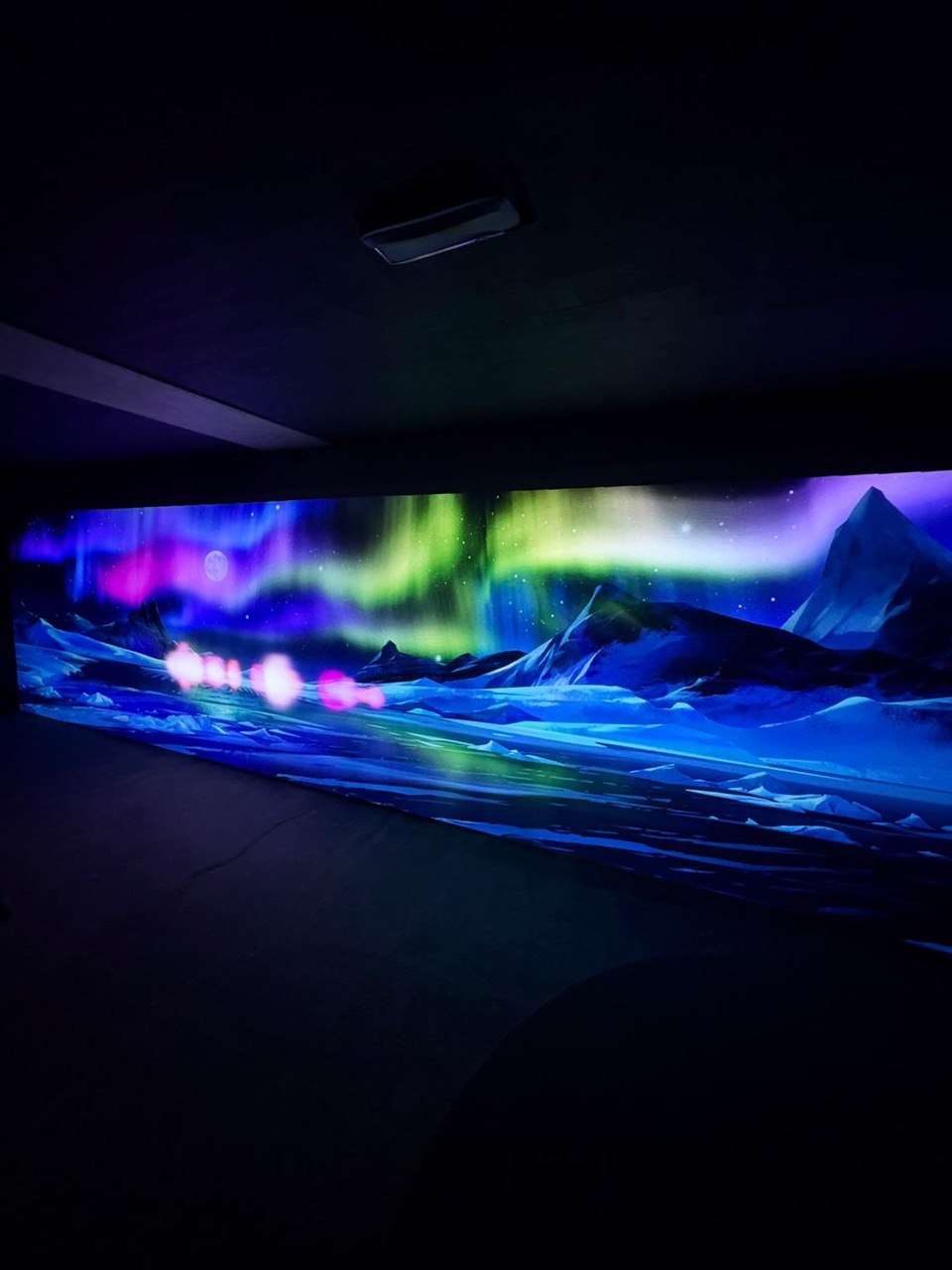
Projection Mapping Can Make the Environment Part of the Experience
In some attractions, the most memorable element may not be an individual game.
It may be the environment surrounding it.
Projection mapping services can transform walls, floors, objects and architectural surfaces into digital canvases.
This allows venues to move beyond rectangular screens.
A wall can become a jungle.
A room can become an underwater environment.
A surface can change according to the story being told.
Interactive365's Imaginarium project at Hobbledown combines interactive walls, flooring, projection, tactile sand play and environmental storytelling to create a connected jungle-themed environment rather than a collection of isolated digital displays.
Memorable Experiences Can Support Return Visits
Families have many entertainment options.
One way for an attraction to stand out is to offer experiences that children talk about after leaving.
That might be:
- Seeing their drawing come alive
- Beating a parent at augmented reality air hockey
- Climbing through a digital landscape
- Discovering virtual treasure on the floor
- Creating rivers in an augmented reality sandbox
- Competing against friends on a Ball Strike Wall
- Jumping through a motion-based game
These moments give children a story to remember.
When interactive content includes multiple games, scenarios or activities, returning visitors may also have something different to experience the next time.
No interactive installation can guarantee repeat visits on its own, but a varied and memorable attraction can contribute to a stronger overall visitor experience.
Designing an Interactive Zone Around Visitor Flow
Adding more activities does not automatically create a better attraction.
The way visitors move between them matters too.
A well-planned interactive zone should consider:
- How visitors enter the space
- Which attraction they see first
- Where queues could develop
- Which products allow group participation
- Where parents can watch
- How high-energy and low-energy activities are distributed
- Whether children can move naturally between experiences
- Whether equipment obstructs circulation
- How long individual activities typically hold attention
Interactive365 offers creative concepts for interactive experiences that can help shape a project around the available environment and intended audience.
Planning the visitor journey before installation can help individual technologies function as one connected attraction.
Choosing the Right Product Mix for a Family Attraction
There is no single perfect combination of interactive equipment.
The right mix depends on the audience, space and type of venue.
For indoor play centres
A combination might include:
These provide movement, competition and repeatable physical play.
For children's museums
A combination might include:
- Interactive Sandbox with Augmented Reality
- Digital Sketch
- Interactive Touch Table
- Interactive Digital Painting Wall
These can combine creative, educational, collaborative and sensory interaction.
For family entertainment centres
A combination might include:
These provide competition, movement and high-energy entertainment.
Don't Overlook Reliability and Maintenance
Visitor engagement depends on technology working when visitors want to use it.
An impressive interactive attraction loses its value if sensors are poorly calibrated, projectors are misaligned or software is unreliable.
Interactive systems may include:
- Projectors
- Sensors
- Computers
- Touch displays
- Software
- Audio equipment
- Mounting hardware
- Networking
- Physical play components
Professional interactive equipment installation and maintenance can help ensure these elements are correctly installed and maintained over time.
For high-traffic family attractions in particular, reliability should be considered alongside creativity and visual impact.
Frequently Asked Questions
What is interactive play?
Interactive play uses technology that responds to a user's actions, such as movement, touch, jumping, throwing or drawing. Examples include interactive floors, augmented reality sandboxes, touch tables and motion-based games.
How can interactive technology improve a family attraction?
Interactive technology can add more opportunities for active participation, creativity, competition and collaborative play. This can help create a more varied visitor experience.
Can interactive play help increase dwell time?
Interactive attractions can give visitors more activities to explore and encourage repeat participation through different games, challenges and experiences. However, dwell time also depends on factors such as venue layout, audience, capacity and the overall quality of the attraction.
What interactive equipment is suitable for an indoor play centre?
Popular options include interactive floors, digital slides, Ball Strike Walls, climbing walls, augmented reality sandboxes, Jumplings and digital drawing experiences.
What interactive products are suitable for younger children?
Digital Sketch, Interactive Digital Painting Walls, Interactive Sandboxes, Touch Tables and Interactive Floors can provide intuitive visual, creative and sensory experiences suitable for younger audiences.
Can interactive games be customised to match a venue theme?
Yes. Interactive content can be developed around a venue's characters, branding, educational subject or visual theme. Projection mapping and custom interactive content can also help connect the digital experience with the physical environment.
Can several interactive attractions be installed together?
Yes. Combining active, creative, sensory and collaborative products can create a varied interactive zone. Interactive365 has delivered multi-product environments for family attractions, schools, museums and leisure destinations.
Are interactive attractions suitable for adults as well as children?
Yes. Competitive and movement-focused systems such as augmented reality air hockey, interactive climbing walls and interactive fitness products can appeal to teenagers and adults as well as younger visitors.
Create More Reasons for Visitors to Keep Exploring
Successful family attractions are not built around technology alone.
They are built around experiences.
Interactive technology can give visitors more ways to participate by combining physical movement, digital storytelling, creativity, competition and collaborative play.
An interactive floor can turn walking into a game.
A sandbox can turn physical sand into a changing digital landscape.
A drawing can become part of an animated world.
A climbing wall can become a challenge.
A familiar game can become an augmented reality experience.
When these technologies are thoughtfully combined, an ordinary activity area can become a venue where children continuously discover something new to do.
Explore Interactive365's full range of interactive play equipment and immersive products, discover its plug-and-play interactive solutions, or contact Interactive365 to discuss an interactive project for your venue.