Introduction
Interactive365 transformed a 64sqm room at Kidspace Romford into The Oceanarium, an immersive underwater landscape designed to entertain, educate, and engage children through interactive digital play.
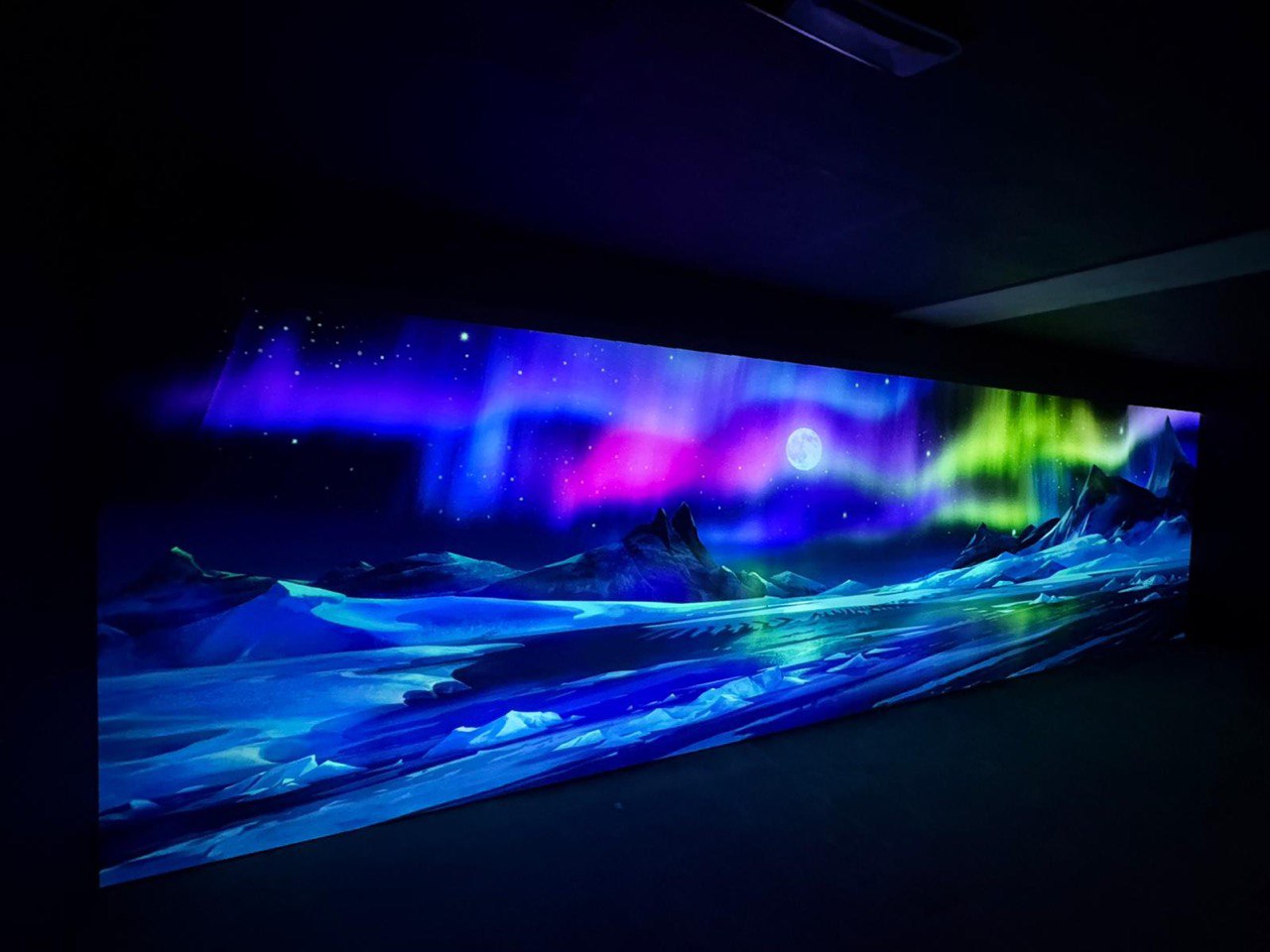
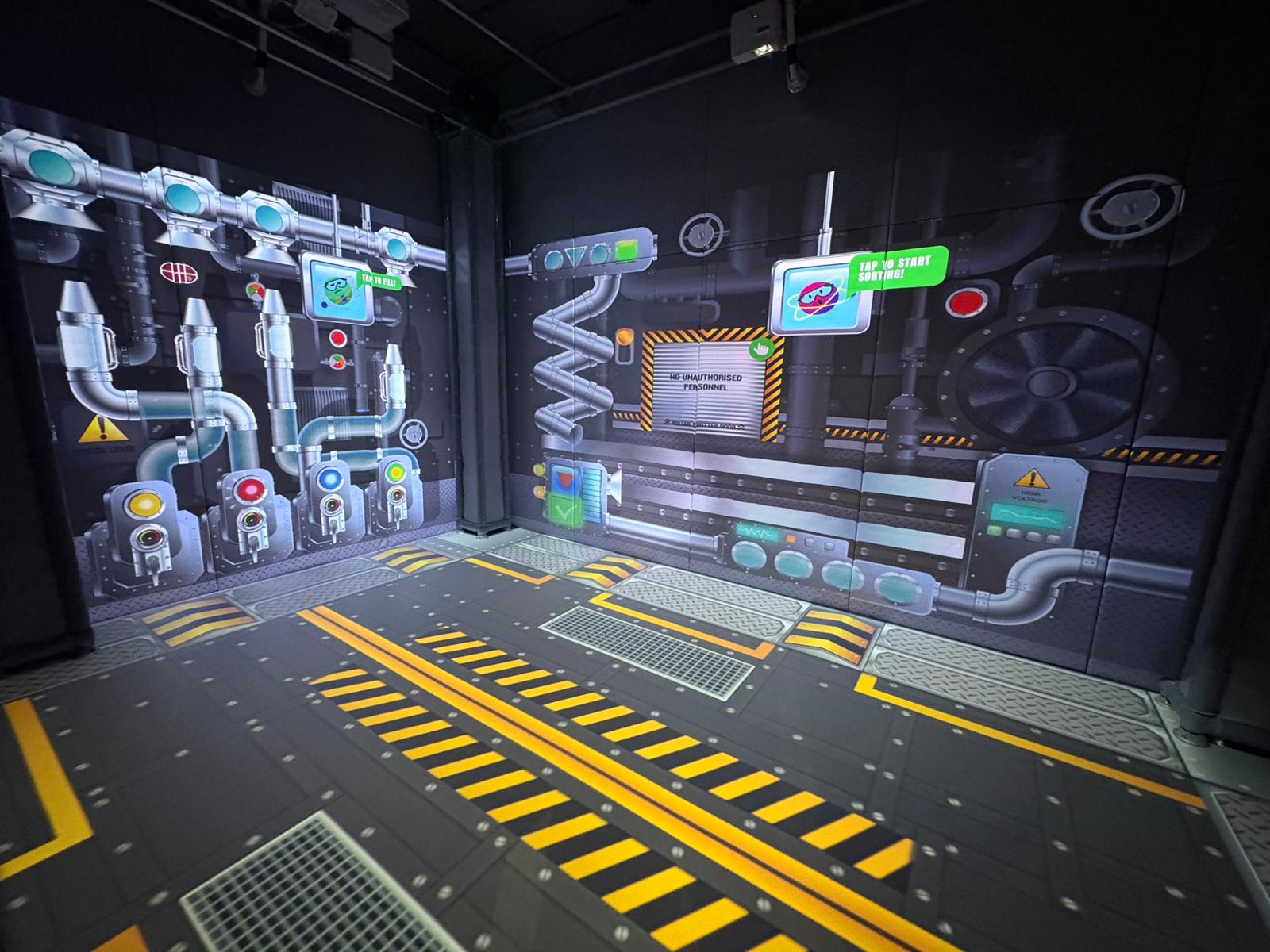
Instead of using traditional screens, the space was developed with a series of projectors to create an almost 360-degree visual environment. This helped turn the room into a seamless underwater world where walls, floors, props, and digital marine life work together to create a more natural and exciting visitor experience.
For children, The Oceanarium offers the feeling of stepping into the deep sea while staying safely inside a soft play centre. For Kidspace Romford, it created a memorable attraction that supports learning, movement, exploration, and imaginative play.
The Brief
Kidspace Romford needed a way to transform an indoor room into something more engaging than a standard play space. The goal was to create an immersive environment that would capture children’s attention, encourage exploration, and make the room feel larger, richer, and more exciting.
Interactive365 was tasked with creating a complete underwater experience that could:
- Make full use of the 64sqm space
- Create an almost 360-degree visual environment
- Use interactive technology in a child-friendly way
- Support daily use in a busy soft play centre
- Combine digital visuals with physical props
- Encourage children to learn about marine life through play
The result was The Oceanarium, an immersive underwater haven where children can explore the sea, interact with marine creatures, and enjoy a digital journey beneath the ocean surface.
The Challenge
The main challenge was to create a visually impressive immersive space without relying on fragile screen-based installations. In a children’s play environment, the technology needed to be durable, practical, and suitable for regular use.
Interactive365 also needed to make sure that the room did not feel empty or flat. Every part of the space had to contribute to the overall experience, from the projected underwater visuals to the physical props placed around the room.
The design had to balance three important goals:
Immersion: Children needed to feel surrounded by the underwater world.
Interaction: The space had to invite children to touch, move, explore, and respond.
Durability: The installation had to work reliably in a busy family attraction environment.
Planning the Immersive Underwater Experience
The Oceanarium was planned as a full-room experience rather than a single digital feature. Interactive365 used the room layout to create a continuous underwater landscape where every surface could add to the story.
The walls and floor were designed to become part of the marine environment. Instead of leaving areas unused, Interactive365 optimised the space so children could feel surrounded by underwater visuals and interactive elements.
This approach helped create a stronger sense of presence. Children were not simply watching an underwater scene. They were standing inside one.
Creating the 360-Degree Underwater Environment
To create the underwater world, Interactive365 used a series of projectors instead of large digital screens. This allowed the visuals to feel more seamless across the space and helped make the installation more practical for day-to-day operation.
The projection-led approach gave the room a softer, more natural immersive quality. Marine visuals could flow across the surfaces of the room, helping the environment feel connected rather than separated into individual displays.
This made The Oceanarium more than a decorated room. It became a digital underwater landscape where children could explore rocks, seaweed, fish, eels, crabs, and other aquatic life.
Adding Physical Props and Touch-Based Control
To make the experience feel more realistic, Interactive365 added heavy stone-style props within the room. These props helped bring a physical dimension to the digital underwater world.
Mounted within the props were iPads that allowed children to adjust parts of the underwater landscape. Through these touch-based controls, children could influence which species of fish and aquatic life appeared in the environment.
This gave children a stronger role in the experience. Instead of passively watching the visuals, they could make choices and see the underwater world respond.
Interactive Walls, Floors, and Marine Life
One of the strongest features of The Oceanarium is that children can interact with more than one part of the room. The walls, floor, objects, and animated marine life all contribute to the feeling of discovery.
Children can engage with inanimate elements such as rocks and seaweed, as well as living marine creatures such as fish, eels, and crabs. This helps the room feel active and responsive.
For family attractions, this type of immersive interactive experience can help increase dwell time, repeat engagement, and visitor satisfaction because the space gives children something to do, not just something to look at.
The Simulation Event
Interactive365 also included a simulation event within the finished installation. This feature runs at intervals and gives children a moment to pause from active exploration.
During the simulation, children can sit back and enjoy an immersive journey along the seafloor and into the deep sea. This adds variety to the experience by combining active play with a more cinematic underwater moment.
The simulation also helps create a stronger story within the space. Children are not only exploring individual elements. They are taken on a guided journey through the marine world.
The Result
The final result is The Oceanarium, an immersive underwater play environment that turns a standard indoor room into a memorable marine attraction.
By combining projection, interactive technology, physical props, touch-based controls, and underwater storytelling, Interactive365 created a space that feels imaginative, educational, and highly engaging for children.
The project shows how digital interactive solutions can transform family entertainment venues, soft play centres, museums, visitor attractions, and educational spaces into more memorable environments.
Why This Project Matters for Visitor Attractions
Today’s visitors expect more than static displays. Families, children, and younger audiences are drawn to experiences that feel active, visual, and shareable.
The Oceanarium demonstrates how immersive technology can help venues create stronger engagement by turning unused or ordinary spaces into interactive destinations.
For soft play centres and family attractions, an immersive room can support:
- Better visitor engagement
- More memorable play experiences
- Educational storytelling
- Higher perceived value
- Stronger differentiation from competitors
- More reasons for families to return
Interactive experiences like The Oceanarium are especially powerful because they combine learning and play. Children can discover marine life, respond to digital content, and enjoy movement-based exploration in a safe indoor environment.
Are You Looking to Create an Immersive Interactive Experience?
Interactive365 creates immersive digital interactive solutions for attractions, entertainment venues, education spaces, and family-focused environments.
From interactive walls and projection mapping to digital play spaces and creative experience concepts, Interactive365 helps transform ordinary spaces into engaging environments that audiences remember.
Whether you want to create an underwater world, an interactive play room, a projection-led attraction, or a custom digital experience, Interactive365 can help plan, design, and deliver a solution built around your space, audience, and goals.
Get in touch with Interactive365 to discuss your next immersive interactive project.
What is The Oceanarium by Interactive365?
The Oceanarium is an immersive interactive underwater experience created by Interactive365 for Kidspace Romford. It transformed a 64sqm room into a marine-themed digital play space with almost 360-degree visuals, projection, physical props, touch controls, and interactive sea life.
What makes The Oceanarium an immersive experience?
The Oceanarium is immersive because it surrounds children with underwater visuals across the room. The use of projectors, interactive walls, floor elements, props, and marine animations helps children feel as though they are exploring an underwater world.
Why did Interactive365 use projectors instead of screens?
Interactive365 used projectors to create a more seamless environment and to make the installation more suitable for day-to-day use in a busy children’s play space. Projection helped create a continuous underwater landscape without relying on large exposed screens.
How do children interact with The Oceanarium?
Children can interact with the underwater landscape through touch-based controls, projected visuals, and responsive digital elements. iPads mounted inside stone-style props allow children to adjust which fish and aquatic life appear in the environment.
Who is this type of immersive experience suitable for?
This type of immersive interactive experience is suitable for soft play centres, family attractions, museums, aquariums, education spaces, visitor centres, leisure venues, and entertainment destinations that want to create more engaging digital environments.
What services from Interactive365 are relevant to this project?
Relevant Interactive365 services include interactive content creation, projection mapping services, creative concepts for interactive experiences, equipment installation and maintenance, and plug-and-play interactive solutions.